
September 18, 2026
Radon and Colorado Real Estate: What Sellers, Buyers and Landlords Have to Disclose
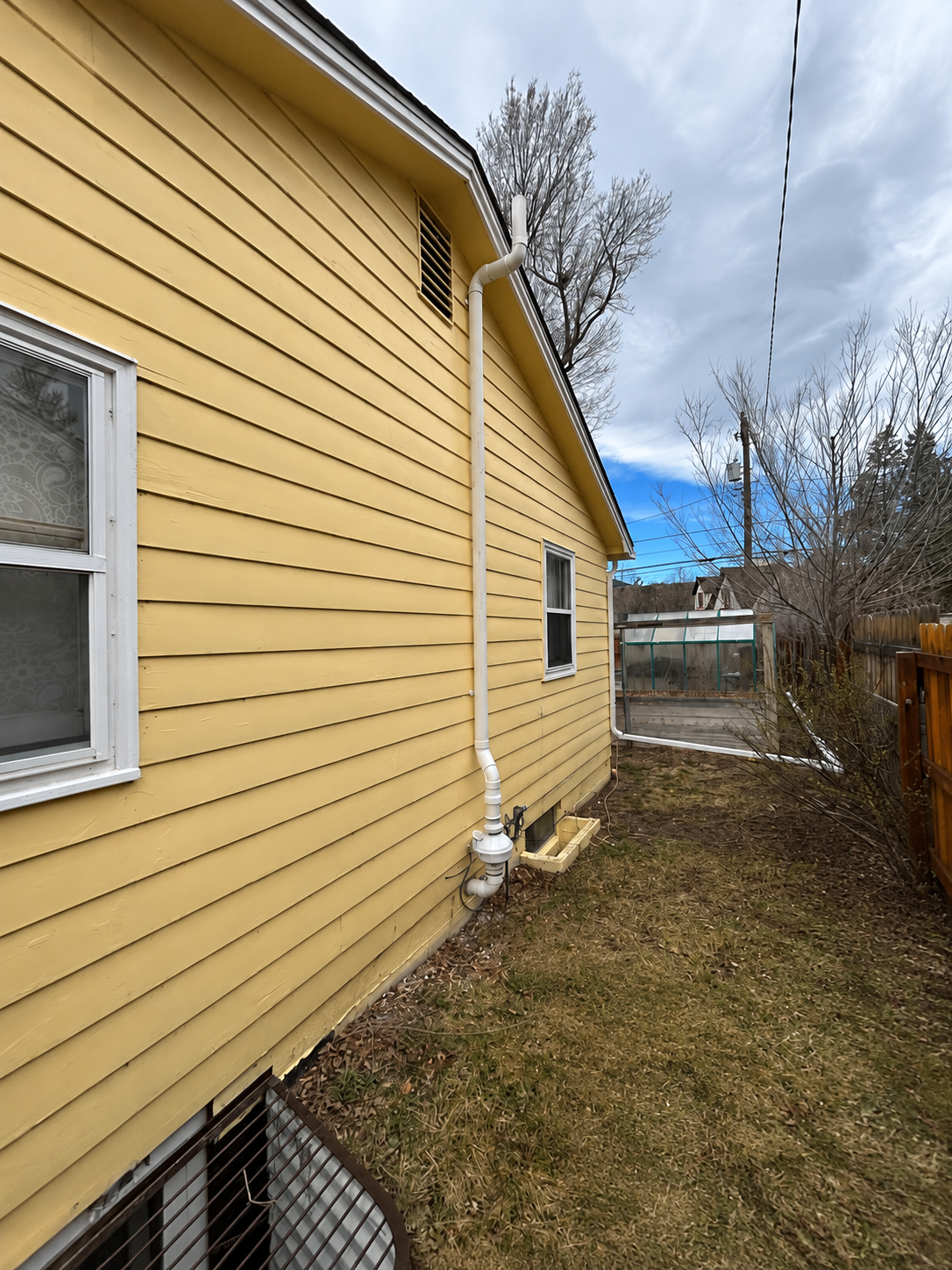
Colorado changed its radon disclosure rules on 7 August 2023, and the change caught a lot of people out. If you are selling, buying or renting out property in El Paso County, this is what the law now expects of you, what it does not, and where the practical traps are.
This is general information about how radon works in a transaction, not legal advice. For the wording of your specific contract or disclosure form, ask your broker or attorney.
What Senate Bill 23-206 actually requires
The law does not require you to test for radon before selling. What it requires is disclosure. Since 7 August 2023, sellers and landlords in Colorado must provide three things:
- A radon warning statement, delivered before the contract is signed
- Any radon test results and mitigation records they know about for the property
- The CDPHE radon brochure
The critical phrase is *know about*. If you had the house tested three years ago and the result was 8.1 pCi/L, that result does not disappear because you did not like it. If a previous owner installed a mitigation system and you have the paperwork, that paperwork goes to the buyer. The obligation is to hand over what exists, not to go and create new information.
The same duties apply to landlords. If you own rental property in Colorado Springs and have never thought about radon, that is the gap worth closing before a tenant asks rather than after.
Why this matters more here than in most of the country
The EPA places El Paso County in Radon Zone 1, its highest-risk tier, meaning the predicted average indoor radon screening level for the county is above the EPA's 4.0 pCi/L action level. El Paso County Public Health reports that over 40% of county homes tested between 2005 and 2023 came back elevated, and CDPHE puts the statewide figure at roughly 1 in 2 homes.
So in this county, a radon disclosure is not a formality attached to an unlikely risk. On the numbers, close to half the houses that get tested have a result the EPA would act on. What radon is and why Colorado geology produces so much of it covers the reason.
The 48-hour problem
Here is the practical trap that costs deals time. A valid short-term radon measurement requires a minimum of 48 hours under closed-house conditions — windows and exterior doors kept shut except for normal entry and exit — and those conditions have to start 12 hours before the detector goes down. Results then take another 48 to 72 hours after collection.
Add it up and a radon test needs the better part of a week from scheduling to written result. Inspection periods in this market are often shorter than people expect, and radon is frequently the last thing anyone remembers to book.
If you are a buyer, ask for the radon test on day one of the inspection period, not day five. If you are an agent, put it on the same call as the general inspection. Booking a radon test is a flat $150 and the measurement window is the only part nobody can shorten.
Reading a result inside a transaction
The EPA recommends taking action at 4.0 pCi/L or higher and recommends considering action between 2 and 4 pCi/L. Both numbers matter in a negotiation, because a 3.6 result is not a clean bill of health — it is a number the EPA explicitly says to think about. What any given reading means, band by band.
One thing worth stating plainly, because it gets blurred by people who want a deal to close: no level of radon is proven safe. 4.0 pCi/L is an action threshold, not a safety line. A result below it means lower exposure, not none. Anyone describing a reading as “safe” is saying something the EPA does not.
Who pays, and what it costs
Mitigation is negotiable between buyer and seller and is normally handled as an inspection-objection item, exactly like a roof or a furnace. No Colorado law assigns it to either side.
For the number: CDPHE puts a typical residential radon mitigation system in Colorado at $1,000 to $2,000. That is the state health department's published range, not a contractor's quote. Where a specific house lands inside it depends on the foundation type, how many suction points the slab needs and the routing to a code-compliant vent termination. How mitigation systems are designed and priced breaks those factors down.
Relative to most inspection-objection items, it is a small, bounded, solvable number — which is why radon rarely kills a deal when it is found early and usually creates friction when it is found late.
A mitigation system is an asset, not a stigma
Sellers sometimes worry that installing a system advertises a problem. In practice it does the opposite. An installed system with a post-mitigation verification test gives every future buyer a documented answer. An untested house gives them an open question and a reason to ask for a credit.
The verification test is the part that matters. A system without a follow-up measurement proves nothing — it is a pipe and a fan that may or may not be doing what it was installed to do. Insist on the written post-mitigation result and keep it with the house records, because under SB23-206 it is now exactly the kind of document you are obliged to pass on. What happens during a mitigation install walks through the process.
Verifying whoever does the work
Colorado has required radon professionals to be licensed since 1 July 2022, for measurement and for mitigation separately. They are different disciplines with different certifications, and a contractor may legitimately hold one without the other.
Ask for the licence number and the NRPP certification before hiring, and check them. Ours are published on every page of this site and on the public NRPP listing — measurement licence RME.0000760 and NRPP 116099-RMP, mitigation licence RMT.0000360 and NRPP 116070-RMS.
A short checklist
- Sellers: gather any past test results and mitigation paperwork now, before listing. Provide the warning statement and the CDPHE brochure. Testing before you list turns a possible late objection into a known number
- Buyers: schedule the radon test on day one of the inspection period. Ask for the seller's disclosure documents, and ask whether an existing system has a post-mitigation verification test
- Landlords: provide the warning statement, records and brochure to tenants. If the property has never been tested, that is the gap to close first
- Agents: put radon on the same call as the general inspection. The 48-hour minimum is the only part of the timeline nobody can compress
We handle transaction testing and mitigation across Colorado Springs, El Paso County and the surrounding communities, for homes, rentals and commercial property.